

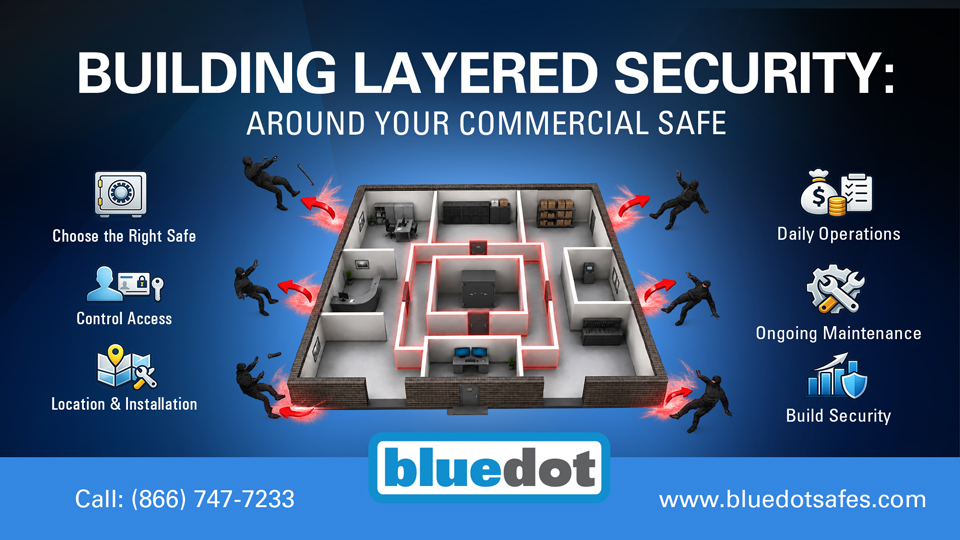
Building a Layered Physical Security Strategy Around Your Commercial Safe
Building a Layered Physical Security Strategy Around Your Commercial Safe

A commercial safe is one of the most important components of a business’s physical security program—but it should never be the only one. Businesses that rely on a single security measure may leave other vulnerabilities unaddressed, increasing the risk of theft, unauthorized access, or operational disruptions.
An effective physical security strategy combines secure storage, controlled access, well-defined procedures, and ongoing maintenance to create multiple layers of protection.
At Blue Dot Safes, we help customers choose security solutions designed for real-world risks—not assumptions.
🛡️ 1. Start with the Right Commercial Safe
Every layered security strategy begins with selecting a safe that matches your organizations operational needs and risk profile.
Depending on your requirements, this may include:
- 📥 Depository Safes for businesses handling regular cash deposits
- 🔥 Fire & Burglary Safes for protecting valuable documents and assets
- 🏢 TL-15 and TL-30 Rated Safes where enhanced burglary resistance is appropriate
- 🛡️ High Security Safes for high-value inventory or sensitive materials
- ⬇️ Floor Safes where discreet storage is beneficial
Choosing the right safe provides the foundation for every other security measure.
🔐 2. Control Who Has Access
Limiting access is just as important as selecting the right equipment.
Businesses should establish clear access control procedures by:
- 👥 Restricting safe access to authorized personnel
- 🔄 Reviewing access permissions regularly
- 🔑 Maintaining secure credential management
- 📋 Using audit trail capabilities where appropriate
- 🔒 Implementing Dormakaba locking solutions when enhanced access management is required
Well-defined access policies help improve accountability while reducing opportunities for internal security risks.
📍 3. Choose the Right Location and Installation
Even a high-quality safe can become more vulnerable if it is installed incorrectly.
A proper installation plan should include:
- 📍 Selecting an appropriate location within the facility
- 🚚 Professional delivery and installation
- 🔩 Concrete anchoring where recommended
- 🏢 Placement that supports daily business operations
- 🚪 Consideration of both physical protection and employee accessibility
Proper installation helps ensure your investment performs as intended.
💼 4. Support Secure Daily Operations
Security extends beyond the safe itself—it should be integrated into daily business procedures.
Organizations should evaluate:
- 💵 Cash handling workflows
- 📥 End-of-day deposit procedures
- 👥 Dual-control practices where appropriate
- 🎓 Employee training
- 📑 Documentation and audit processes
When physical security aligns with operational procedures, businesses are better positioned to reduce errors and improve accountability.
🔎 5. Plan for Ongoing Maintenance and Reviews
Physical security is not a one-time project.
Over time, businesses may experience:
- 📈 Operational growth
- 👥 Staffing changes
- 💎 Increased asset values
- 📋 New compliance requirements
- 📄 Changing insurance expectations
Regular inspections, preventive maintenance, and periodic security reviews help ensure that safes and related procedures continue supporting the organizations evolving needs.
📈 6. Build Security That Can Grow with Your Business
As organizations expand, their security requirements often become more complex.
A layered security strategy should account for:
- 🏢 Additional business locations
- 💰 Increased cash volumes
- 👥 More employees requiring controlled access
- 📦 Expanded inventory or sensitive assets
- 🔄 Future equipment upgrades
Planning for future growth helps businesses avoid reactive security decisions while supporting long-term asset protection.
✅ Layered Physical Security Checklist
Before investing in or upgrading a commercial safe, review the following:
- ✔ Select a safe that matches your operational risks
- ✔ Restrict access to authorized personnel
- ✔ Plan for professional installation and concrete anchoring
- ✔ Establish secure cash handling and operational procedures
- ✔ Maintain audit trails where appropriate
- ✔ Schedule regular maintenance and inspections
- ✔ Review insurance and compliance requirements
- ✔ Reassess security as your business grows
🤝 Why Businesses Trust Blue Dot Safes
Physical security is most effective when every component works together.
Blue Dot Safes helps businesses evaluate, select, install, and maintain security solutions that support long-term protection, including:
- 📥 Depository Safes
- 🔥 Fire & Burglary Safes
- 🛡️ High Security Safes
- 🏢 TL-15 and TL-30 Rated Safes
- ⬇️ Floor Safes
- 🔒 Dormakaba locking solutions
Our team provides guidance on product selection, professional delivery, installation planning, concrete anchoring, security evaluations, and long-term maintenance to help businesses build practical security strategies aligned with operational requirements and real-world risks.
🔎 Final Thoughts
A commercial safe plays an important role in protecting valuable assets, but it delivers the greatest value when integrated into a broader physical security strategy.
By combining appropriate safe selection, controlled access, professional installation, operational procedures, and ongoing maintenance, businesses can build multiple layers of protection that support both day-to-day operations and long-term security objectives.
🔒 Talk to a Blue Dot Safes Specialist
If you are evaluating your current safe or planning an upgrade, our team is here to help.
📞 Call us at (866) 747-7233
📧 Email: [email protected]
🌐 Visit: bluedotsafes.com
Built in America. Trusted by professionals. Secure by design.


