

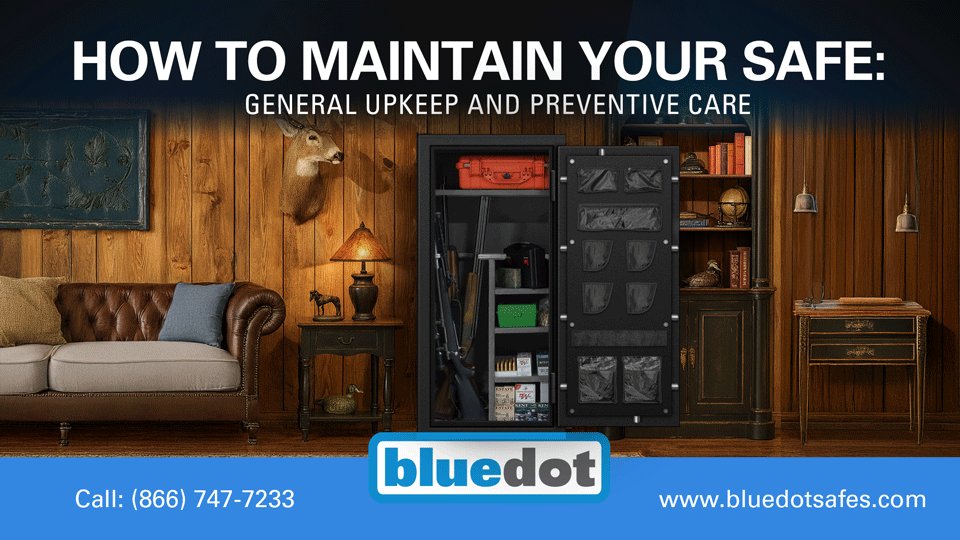
How to Maintain Your Safe – General Upkeep and Preventive Care
How to Maintain Your Safe – General Upkeep and Preventive Care
How to Maintain Your Safe – General Upkeep and Preventive Care
Your safe is built to protect what matters most, but like any piece of security equipment, it needs regular care to perform at its best. Proper maintenance not only extends the lifespan of your safe but also ensures it works flawlessly when you need it most.
Whether you rely on a Gun Safe to secure firearms, a Depository Safe for business cash drops, or a Fire & Burglary Safe for irreplaceable documents, preventive upkeep is the key to long-term reliability.
At Blue Dot Safes, we build safes designed for strength and security—but ongoing care keeps them dependable for decades.
✅ 1. General Upkeep: Routine Habits to Follow
- Keep it clean – Wipe the exterior with a soft, slightly damp cloth to prevent dust buildup. For electronic keypads, use a dry microfiber cloth and never spray liquid directly on the surface.
- Check the interior – Periodically empty your safe and vacuum the inside with a soft-brush attachment. This prevents dirt and debris from interfering with stored valuables.
- Control moisture – Place silica gel packs or a safe dehumidifier inside, especially for Floor Safes installed in basements or areas prone to dampness.
- Lubricate moving parts – Lightly oil hinges and bolts once a year with manufacturer-approved lubricant. Avoid over-lubrication, as excess oil can attract dust.
- Change the battery – For electronic locks, replace the keypad battery annually (or sooner if response time slows).
- Check the door swing – Your safe’s door should not swing freely when open. If it does, it may need hinge adjustment or re-leveling to prevent accidental closure or damage.
- Install a door stop – A simple floor-mounted door stop can protect nearby walls and furniture from being damaged when the door is fully opened.
❌ 2. Preventive Measures: What to Avoid
- Avoid harsh cleaners – Chemicals like bleach or ammonia can damage finishes and corrode metal.
- Don’t force the lock or handle – If you notice resistance, forcing it may cause damage. Instead, schedule a professional inspection.
- Avoid extreme locations – Storing safes in damp garages or areas exposed to temperature swings can cause rust, condensation, and wear.
- Don’t neglect security systems – Check alarm and camera connections to ensure your safe is fully protected
🛡️ 3. Preventive Care Checklist
To keep your safe in peak condition, follow this routine:
- Inspect your safe quarterly for signs of rust, dents, or worn seals.
- Change or update codes, especially after staff changes in business settings.
- Test the lock regularly to ensure smooth operation.
- Confirm the door opens and closes smoothly without free-swinging.
- Schedule professional service before the busy season to avoid unexpected downtime.
🇺🇸 Built for Reliability, Backed by Care
Every Blue Dot Safe—from High Security Safes to Utility Safes—is engineered in the U.S.A. for durability and protection. But even the strongest safe performs better with proper upkeep. Preventive maintenance today ensures security tomorrow.
🔎 Final Thoughts: Protect Your Safe, Protect Your Valuables
Routine care doesn’t take much time, but it can make all the difference when it comes to protecting your most important assets. By investing a few minutes in upkeep, you’ll avoid costly repairs, improve reliability, and ensure your safe stands ready when you need it most.
💬 Need expert servicing, or considering an upgrade to a new safe?
📞 Call us at (866) 747-7233
📧 Email: [email protected]
🌐 Explore solutions at bluedotsafes.com
Built in America. Trusted by professionals. Secure by design.


