

Cutting Torch & Tool Attacks: What Your Safe Needs to Withstand Leave a comment
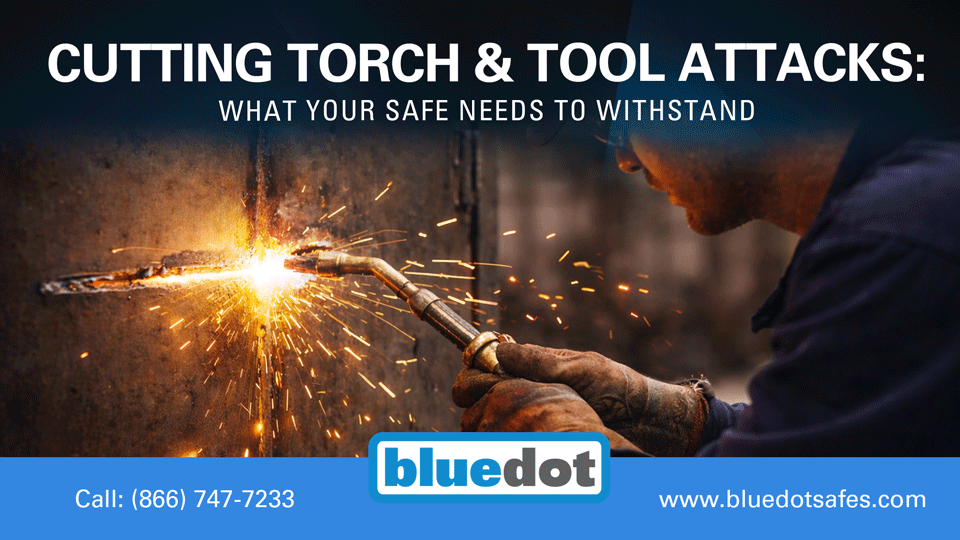
Cutting Torch & Tool Attacks: What Your Safe Needs to Withstand
Most safes are built to deter casual theft—not withstand a determined, tool-equipped attack.
Today’s burglary crews are more capable, targeted, and better equipped than ever. When high-value assets are involved, attackers often arrive prepared with professional-grade tools designed to breach a safe quickly and efficiently.
Among the most serious threats are cutting torch and tool attacks—methods specifically used to defeat safes that rely on basic steel construction or cosmetic “heavy-duty” design.
At Blue Dot Safes, we help customers select safes engineered to withstand real-world attack methods—not just basic tampering.
🔥 1. What Are Cutting Torch & Tool Attacks?
Cutting torch and tool attacks involve the use of high-powered equipment to forcibly penetrate or open a safe.
Common methods include:
- 🔥 Oxy-acetylene cutting torches that burn through steel
- ⚙️ Angle grinders designed for rapid metal cutting
- 🛠️ Power drills targeting locks and internal mechanisms
- 🔧 Pry bars and impact tools used to exploit structural weaknesses
These are not opportunistic break-ins. They are deliberate, targeted attacks where criminals expect resistance—and come prepared to overcome it.
Without proper protection, many safes can be compromised in well under 30 minutes.
⚡ 2. Why Standard Safes Fail Against These Attacks
Many residential and light-duty safes are not designed to resist advanced attack methods.
Common weaknesses include:
- 🔩 Thin steel walls that are easily cut or breached
- 🔥 Lack of composite or heat-resistant materials
- 🚪 Weak door construction and hinge systems
- 🔐 Minimal internal reinforcement around locks and boltwork
As a result, cutting torches can penetrate basic steel enclosures in minutes when no thermal barrier is present. Grinders and drills can quickly exploit vulnerable areas—especially around doors and locking mechanisms.
This is why weight alone is not a reliable indicator of security.
🛡️ 3. How High-Security Safes Are Built Differently
Safes designed for real burglary resistance use layered construction and engineered defensive features.
These may include:
- 🧱 Composite walls combining steel with proprietary fill materials
- 🔥 Heat-resistant barriers that slow torch penetration
- 🔐 Reinforced doors with multi-directional locking bolts
- 🛠️ Hardened steel plates to resist drilling
- ⚙️ Relocking mechanisms that activate during tampering
The goal is not to make a safe “unbreakable”—it is to delay the attacker.
That delay increases time, noise, exposure, and risk—factors that often cause burglars to abandon the attempt.
🔍 4. Understanding TL Ratings and Tool Resistance
UL burglary ratings provide a verified standard for how a safe performs under real attack conditions.
- 🛡️ TL-15: Resists tool-based attacks for 15 minutes of net working time
- 🛡️ TL-30: Resists more aggressive tool attacks for 30 minutes of net working time
These ratings are based on controlled testing where skilled technicians attempt to breach the safe using tools such as:
- 🛠️ Drills
- ⚙️ Grinders
- 🔧 Pry bars
- 💥 Impact tools
“Net working time” refers to active attack time—not setup or pauses—making these ratings more demanding than they may appear.
Higher-rated safes may also incorporate additional protection against advanced attack methods, including thermal exposure and cutting tools.
Choosing a UL-rated safe ensures your protection is tested, measurable, and recognized by insurers.
🔩 5. Why Installation Still Matters
Even the most secure safe can fail if it is not properly installed.
Attackers may:
- ↩️ Tip or reposition the safe to access weaker sides
- 📍 Target the base or rear panels
- 🚚 Remove the safe entirely for off-site access
Proper installation includes:
- 🧱 Anchoring the safe to a concrete surface
- 📍 Positioning it to limit access to vulnerable areas
- 📹 Integrating it with alarm or surveillance systems
A poorly installed TL-rated safe can fail faster than a properly installed lower-rated unit.
💸 6. The Real Cost of Inadequate Protection
When a safe fails during a tool or torch attack, the consequences extend beyond the immediate loss.
Potential impacts include:
- 💎 Loss of high-value assets
- ⏱️ Business interruption
- 📋 Insurance claim complications or denial
- 📉 Long-term financial and reputational damage
For businesses handling cash, jewelry, firearms, or sensitive materials, the risk is significantly higher.
In many cases, a single loss event exceeds the cost of a properly rated safe.
🔎 Final Thoughts: Build Your Security for Real Threats
The right safe doesn’t just store your assets—it buys you time.
And in a real break-in, time is the deciding factor.
Cutting torch and tool attacks are not theoretical—they are actively used in targeted burglaries. These methods generate significant noise, heat, and visibility, increasing risk for the attacker over time—but only if the safe can resist long enough.
A safe that cannot withstand these conditions may fail when it matters most.
By choosing a safe with tested resistance, advanced construction, and proper installation, you significantly reduce the likelihood of forced entry—and protect your assets with confidence.
🔒 Talk to a Blue Dot Safes Specialist
If you’re unsure whether your current safe can withstand modern attack methods, our team can help you evaluate your protection and recommend the right solution.
📞 Call us at (866) 747-7233
📧 Email: [email protected]
🌐 Visit: bluedotsafes.com
Built in America. Trusted by professionals. Secure by design.


