

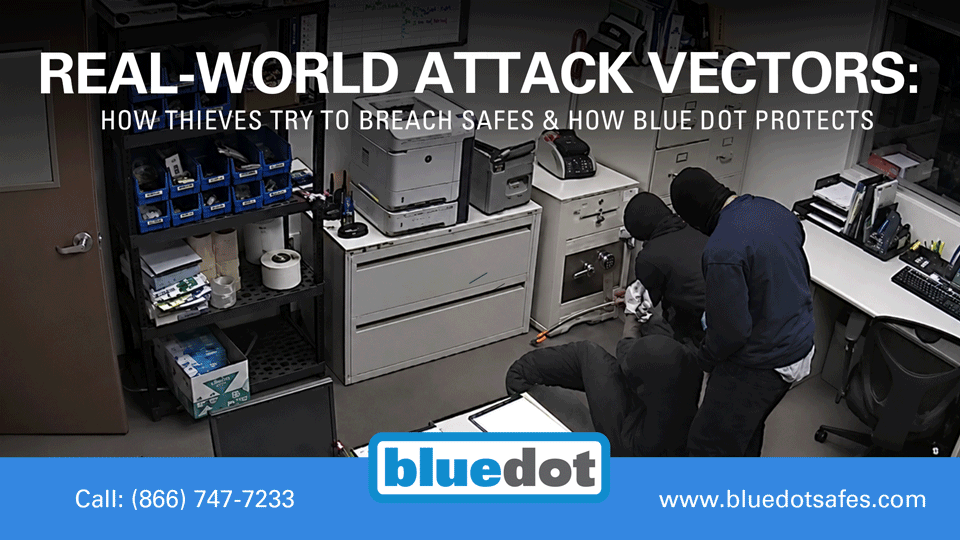
Real-World Attack Vectors: How Thieves Try to Breach Safes & How Blue Dot Protects
Real-World Attack Vectors: How Thieves Try to Breach Safes & How Blue Dot Protects

When people imagine a safe burglary, they often picture a thief guessing combinations or quietly manipulating locks. In reality, most modern safe attacks are fast, aggressive, and highly targeted.
Today’s criminals use power tools, pry attacks, removal tactics, and strategic planning to defeat vulnerable safes as quickly as possible. Understanding these real-world attack vectors is critical for businesses and homeowners who rely on safes to protect cash, firearms, documents, jewelry, and sensitive assets.
At Blue Dot Safes, we help customers choose safes designed to withstand real-world threats—not just look secure on the outside.
In many cases, burglars spend less than 10 minutes attempting entry before abandoning the attack or escaping with the safe itself. That means every layer of protection—steel thickness, anchoring, lock quality, and burglary rating—can make the difference between a failed attempt and a devastating loss.
🔍 1. What Are “Attack Vectors” in Safe Security?
An attack vector is simply the method or approach a criminal uses to compromise a safe.
Rather than relying on a single technique, thieves typically exploit:
- ⚠️ Weak construction
- 🔩 Poor installation
- 🔐 Outdated locking systems
- 🚚 Unanchored safes
- 🛡️ Inadequate burglary ratings
Modern burglaries are often planned in advance, with criminals targeting the safest point of attack—not necessarily the lock itself.
Professional thieves also look for environmental weaknesses such as isolated installation areas, poor lighting, lack of surveillance, and limited physical barriers around the safe. Security is never just about the safe itself—it’s about the entire protection strategy surrounding it.
🔩 2. Pry Attacks: Exploiting Weak Door Gaps
One of the most common burglary methods is the pry attack.
Criminals use:
- 🔧 Pry bars
- 🛠️ Crowbars
- ⚙️ Hydraulic tools
- 📐 Wedges
to force gaps around the safe door.
Safes with:
- 🔩 thin steel,
- 🚪 weak door frames,
- 🔐 or inadequate bolt systems
can fail quickly under concentrated leverage.
🛡️ How Blue Dot Helps Protect Against Pry Attacks
Blue Dot Safes offers:
- 🧱 Reinforced door construction
- 🔒 Multi-bolt locking systems
- ⚙️ Heavy-duty steel designs
- 📍 Professionally installed safes positioned to reduce pry access
Proper placement and anchoring significantly increase resistance against these attacks.
Many high-security safes also feature recessed doors, reinforced jambs, and internal hinge-side locking mechanisms that help prevent door peel attacks and frame separation.
🔥 3. Cutting Torch and Grinder Attacks
Portable grinders and cutting torches are now widely available and commonly used in targeted burglaries.
These attacks focus on:
- ⚙️ Cutting through thin steel walls
- 🧱 Weak side panels
- 🔐 Lock areas
- 🚪 Hinges and door seams
Consumer-grade safes or lightly constructed imported safes are especially vulnerable to thermal and cutting attacks.
🛡️ How Blue Dot Helps Protect Against Cutting Attacks
Higher-security safes may include:
- 🧱 Composite wall construction
- 🔥 Heat-resistant materials
- 🛠️ Drill-resistant hard plates
- 🛡️ Reinforced barriers designed to delay thermal attacks
Many UL-rated safes are specifically engineered to resist prolonged tool attacks using real burglary equipment.
Time is one of the biggest enemies of a burglar. Even a few additional minutes of resistance can dramatically increase the likelihood of detection, interruption, or abandonment of the attack.
⚡ 4. Rapid Removal Attacks
Not every thief attempts to open a safe on-site.
In many burglaries, criminals simply:
- ↩️ Tip the safe over
- 🚚 Remove it from the building
- 🔓 Open it later in a less risky location
This is especially common with:
- 🏠 Smaller residential safes
- 🚫 Unanchored safes
- ⚠️ Improperly installed units
🔩 Why Anchoring Matters
Professional anchoring:
- 🛡️ Increases theft difficulty
- 🚫 Prevents rapid removal
- 📋 Improves insurance compliance
- ⚙️ Significantly increases overall resistance
At Blue Dot Safes, professional installation and concrete anchoring are considered essential—not optional.
A properly anchored safe can turn a quick “grab-and-go” theft into a noisy, time-consuming operation that many criminals are unwilling to attempt.
🛡️ 5. Lock Manipulation and Drilling Attempts
While Hollywood often dramatizes lock manipulation, drilling attacks remain far more common in real-world burglaries.
Attackers may attempt to:
- 🛠️ Drill lock mechanisms
- ⚙️ Disable relockers
- 🔐 Compromise electronic locks
- 🧱 Target weak lock housings
Older or low-quality lock systems are often more vulnerable.
🛡️ How Blue Dot Helps Protect Against Lock Attacks
Blue Dot Safes offers solutions with:
- 🛠️ Drill-resistant hard plates
- 🔒 High-security lock systems
- ⚙️ Relocking devices
- 🏢 Commercial-grade locking mechanisms
Routine inspections and lock maintenance also help identify vulnerabilities before they become failures.
Modern commercial safes may also incorporate multiple relockers that automatically engage if tampering or forced entry is detected, creating additional barriers against attack.
📋 6. Why Burglary Ratings Matter in Real Attacks
One of the most important differences between consumer-grade safes and commercial-grade safes is verified testing.
Safes with recognized UL ratings are tested against:
- 🔧 Pry tools
- 🛠️ Drills
- ⚙️ Grinders
- 💥 Impact tools
- 🚨 Aggressive burglary methods
Examples include:
- 🛡️ TL-15 Rated Safes – Resist professional attacks for at least 15 minutes
- 🛡️ TL-30 Rated Safes – Built for longer, more aggressive attacks
These ratings provide measurable standards—not marketing claims.
Many inexpensive safes advertise “security” without undergoing independent testing. A true UL burglary rating confirms the safe has survived controlled attacks using real tools and trained technicians.
🏢 7. Businesses Face Higher Risks Than Ever
Retail stores, hospitality businesses, pawn shops, cannabis operations, jewelers, and financial services face increasing exposure to organized theft.
Criminals often:
- ⏰ Study operating hours
- 🔍 Identify weak safes
- 💰 Monitor cash handling patterns
- ⚠️ Target locations with poor installation practices
This is why safe selection should always consider:
- 💎 Asset value
- 🔁 Access frequency
- ⚠️ Operational risk
- 📋 Insurance requirements
- 🛡️ Real-world attack methods
For high-risk industries like cannabis, pawn, and jewelry, safe selection is often tied directly to compliance requirements, insurance approvals, and overall business continuity planning.
🤝 Why Businesses Trust Blue Dot Safes
Blue Dot Safes specializes in professionally selected, delivered, and installed safes designed for real-world security threats.
Our solutions include:
- 🔫 Gun Safes
- 📥 Depository Safes
- 🔥 Fire & Burglary Safes
- 🛡️ High Security Safes
- 🧰 Utility Safes
- ⬇️ Floor Safes
- 🏢 TL-15 and TL-30 Rated Safes
We help customers choose protection based on actual risk exposure—not assumptions or appearance alone.
Our team also helps customers evaluate installation environments, operational vulnerabilities, and future growth needs to ensure long-term protection—not just immediate storage.
🔎 Final Thoughts: Security Should Be Built for Real Attacks
Modern burglars don’t rely on luck—they rely on tools, speed, and preparation.
Understanding real-world attack vectors helps businesses and homeowners make smarter security decisions and avoid relying on safes that may fail under serious attack conditions.
A properly rated, professionally installed safe provides more than storage—it provides tested resistance when it matters most.
🔒 Talk to a Blue Dot Safes Specialist
If you’re unsure whether your current safe can withstand modern burglary methods, our team can help evaluate your protection and recommend the right solution.
📞 Call us at (866) 747-7233
📧 Email: [email protected]
🌐 Visit: bluedotsafes.com
Built in America. Trusted by professionals. Secure by design.


